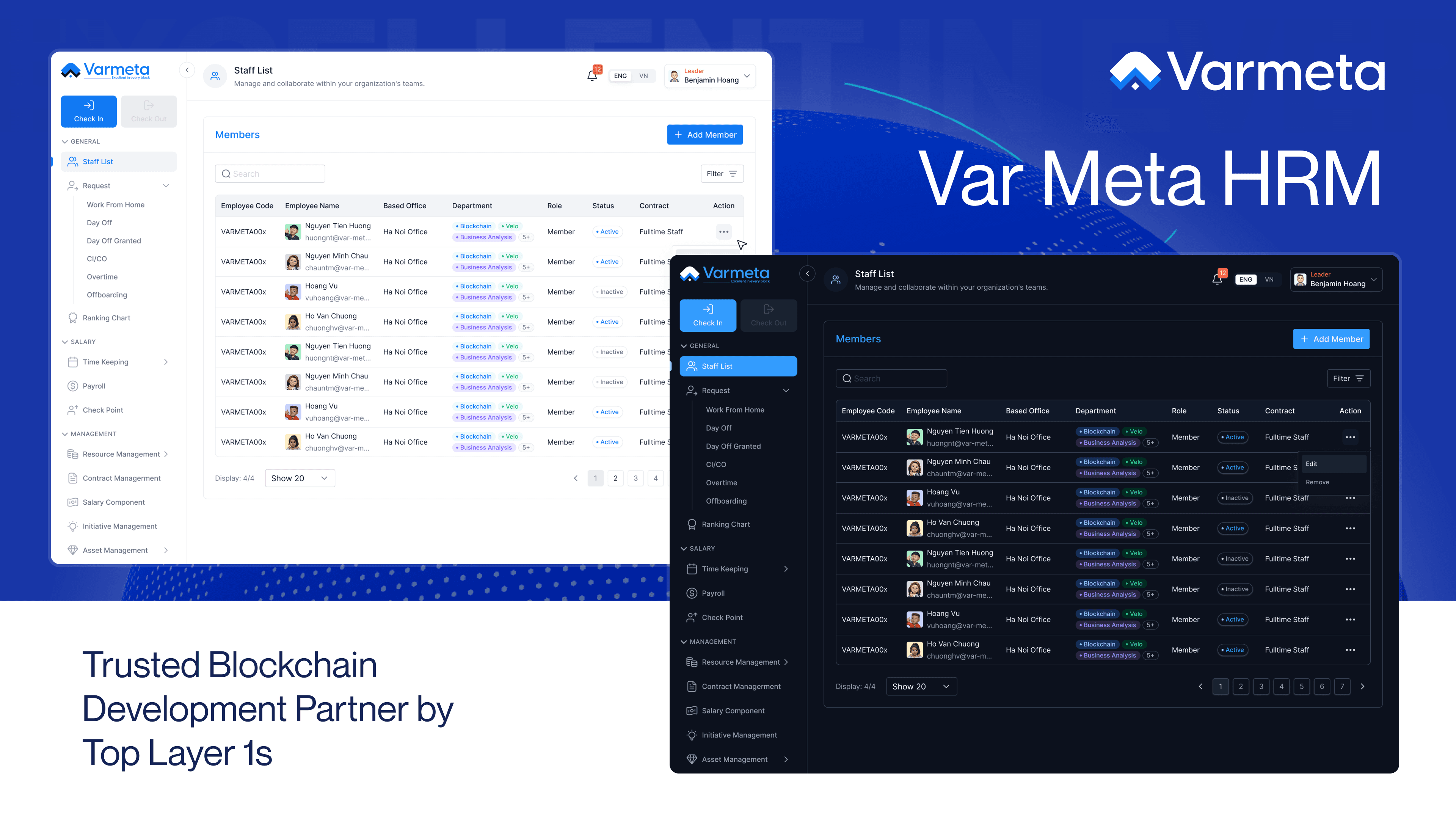
HRM Varmeta
/2025/
1. Background
Varmeta needs a centralized platform to manage team productivity, information, and business goals. As a Product Designer Lead, my role is to shape the overall experience and detailed flows to align with the company's values.
2. Design goals
/ How did I solve business challenges with design solutions?
The product had already been launched, but it didn't align with the company's values of sustainability and innovation. I conducted quick interviews with C-level executives to understand these values and identify current pain points—not just for the CEO and CTO, but for employees as well.
As Product Design Lead, I was directly involved in cross-functional business discussions, including weekly meetings with the CEO and leaders from other departments. Being part of these conversations gave me a clear understanding of the challenges. This early visibility allowed me to connect business strategy with product opportunities and ensure that every design decision supported Varmeta HRM's long-term sustainability.
/ Goals and Success Metrics
Based on user interviews with C-level executives, team leaders, and frequent users (especially the HR team), I created user personas, customer journey map and developed a problem statement. I found that everyone needed to "handle features and complete their tasks in the shortest possible time."
→ Two priority key metrics our team needs tracking: Completion rate and Time on task

3. Analyze the problems & identify opportunities
Heuristic Review of the Current Design
Key issues I identified:
The dashboard was overloaded with poor information architecture.
The UI implicitly trained for all users to log in/log out first, rather than focus on their most crucial task.
The experience lacked clear guidance for everyday tasks.
4. Design Approach
/ Understanding User Segments and Their Needs
To build a more meaningful personalization system, we needed to understand that not all users behave the same way. While business metric tracking was important for some (like C-level members), many users simply wanted to find the right place to update information quickly (HR members and employees), without browsing through endless menu features/ filters.
/ Method
To build a deep understanding of user behavior, I followed a mixed-method research approach. I began with in-depth interviews to uncover users' motivations, attitudes, and decision-making patterns. Then I used insights from those interviews to define three key user segments: C-levels, team leaders, and employees. This helped me discover useful findings that informed design decisions.
5. Solutions
Based on analysis and synthesis from user interview sessions and internal surveys:
/ Problem Hypothesis
Users who input employee information daily feel overwhelmed by massive input fields that don't follow a convenient flow. The current structure doesn't match their mental model—for example, HR members need to input basic details (name, age, role) during the interview/onboarding phase first, then add background information (family, education, degrees) after onboarding, depending on where they are in the hiring process.
→ How might we help users find relevant employee information more effectively while matching their mental model in proper chronological order?
6. Results & Impact
Post-Launch Validation & Impact After deployment, I conducted usability testing with the main user segments and analyzed data from Hotjar. While direct access to the analytics dashboard is no longer available post-project, the early launch data confirmed our team hypothesis:
Outstanding Satisfaction: Achieved an NPS of 80, reflecting strong user advocacy.
Accelerated Workflows: Session recordings showed users moving seamlessly through the new chronological flow, resulting in an estimated 30% reduction in time-on-task.
Operational Adoption: The HR department reported a noticeably smoother onboarding process for new employees (faster than older version approx 30%)
Stakeholder Validation: Received positive feedback from C-level executives for aligning product with the business vision & goals.
The redesign successfully transformed Varmeta's HRM platform from a fragmented tool into a streamlined operational hub.