UXHuman AI
/2025/

1. Background
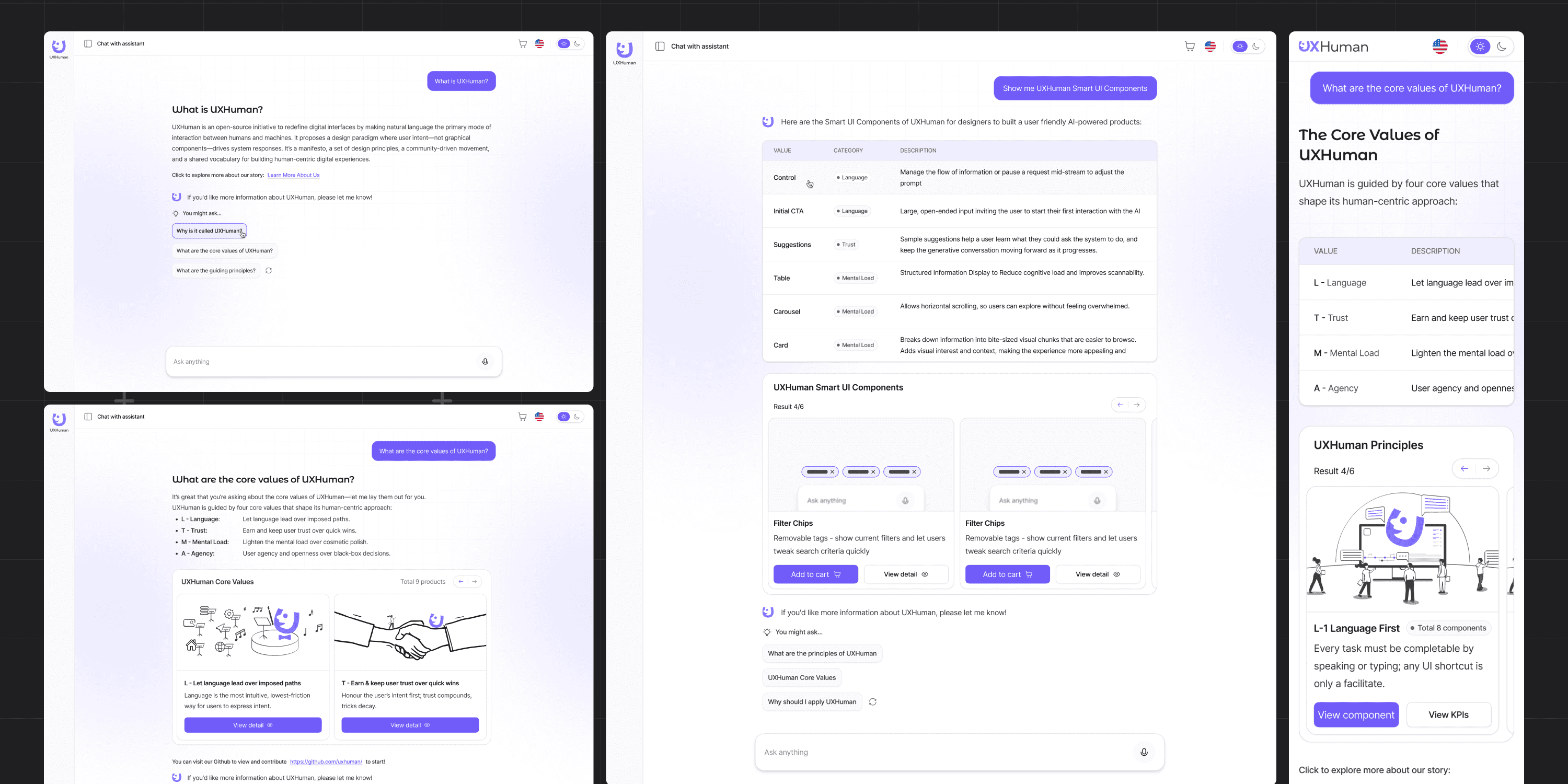
UXHuman is an open-source initiative to redefine digital interfaces by making natural language the primary mode of interaction between humans and machines. It proposes a design paradigm where user intent—not graphical components—drives system responses. It’s a manifesto, a set of design principles, a community-driven movement, and a shared vocabulary for building human-centric digital experiences.
2. Design goals
As a strategic product of the SMGF ecosystem, UXH was created to address the current problem of overly passive user experience, where users have to interact indirectly and wait for responses from the system. Therefore, UXH seeks to interact with users through "Intent-based" interaction, attempting to connect directly with user intentions to better understand them.
UXHuman will be a platform that help users interact with the AI. The platform offered strong capabilities, the interface felt functional and human‑centric. Users struggled to understand the philosophy behind the experience, so that is where UXHuman represented, and how its values shaped the way they interact with the system.
3. Design approach
Our team initiated the process by conducting a comprehensive analysis of conversational AI patterns, studying how industry-leading platforms successfully onboard users to complex concepts through progressive disclosure and guided flows.
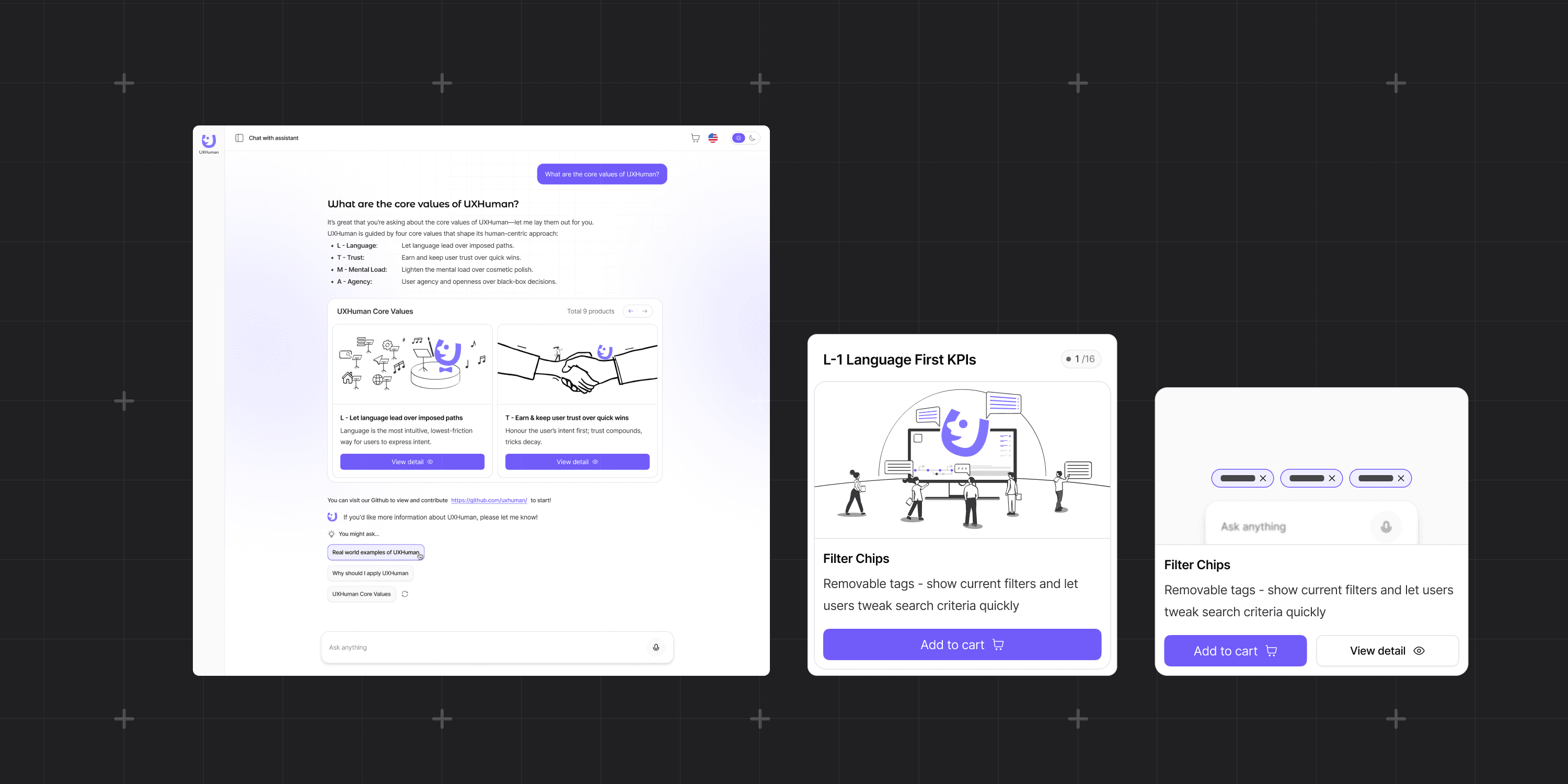
This research informed our visual and structural strategy. My team defined a visual language characterized by a calming tone, organic shapes, and soft gradients to reduce intimidation and foster an approachable environment. The structural solution unified the experience through:
A compelling entry point (“What is UXHuman?”) to immediately establish context.
Modular content blocks to clearly articulate core principles and values.
A refined, multilingual conversational interface.
Custom illustrative cards designed to translate abstract technical concepts into intuitive visual cues.
4. Design System
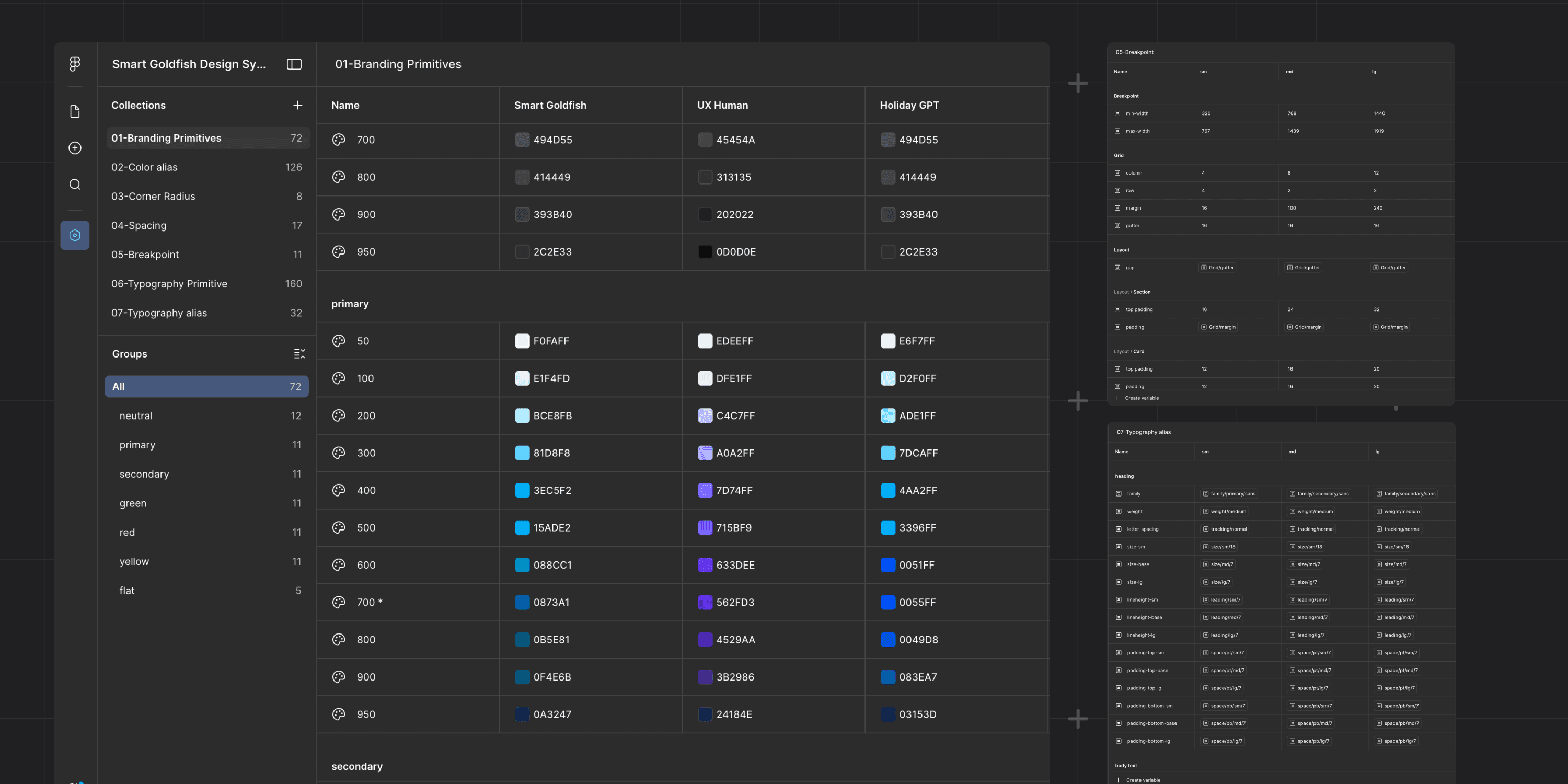
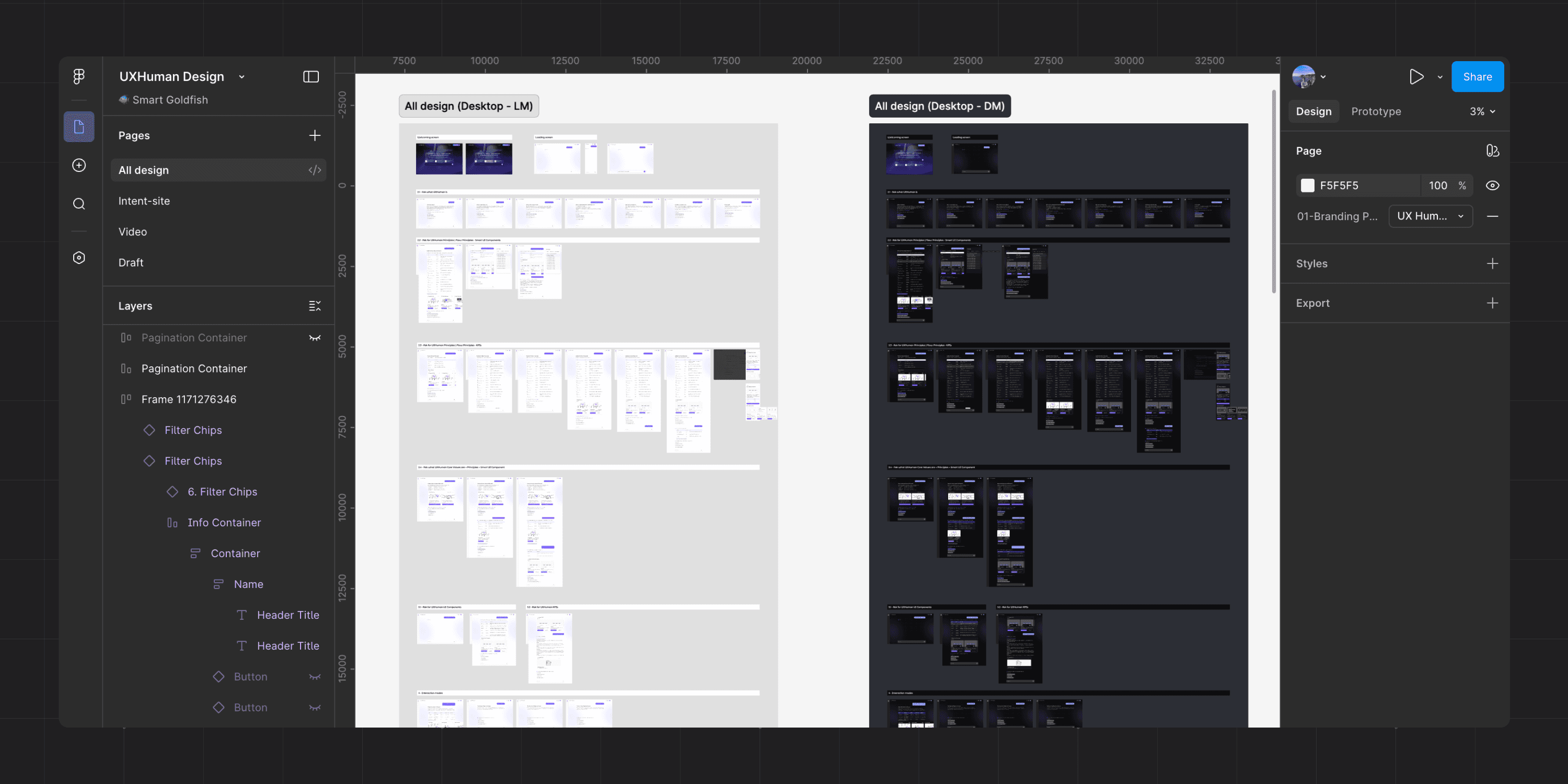
I architected and developed a comprehensive Design System from the ground up, also lay the foundation for the future growth of SMGF eco. Because UXHuman serves as the core of a three-product SMGF ecosystem, the system was built with modularity and extensibility at its foundation.
This ensured absolute visual and functional consistency across the entire suite of products, streamlining the design-to-engineering handoff and significantly accelerating cross-product development.
5. Designing UI
Leveraging established user flows and existing data architecture, I translated complex conversational logic into a streamlined, high-fidelity UI. My focus was on optimizing micro-interactions, managing state transitions within the chat interface, and establishing a visual hierarchy that naturally guides the user toward intent-driven actions without causing cognitive overload.
6. Results & Impact
The final product delivered a highly cohesive user journey that successfully demystifies UXHuman from the very first touchpoint. By synthesizing a conversational UI with simplified visual metaphors, the resulting experience feels profoundly natural, calming, and deeply informative.
The structured yet highly flexible flow significantly reduced cognitive load and bolstered user confidence, firmly establishing UXHuman's emotional and brand identity. Ultimately, this approach successfully translated a highly abstract AI concept into an accessible, human-centered product—setting a benchmark for clarity and visual cohesion within the SMGF ecosystem.